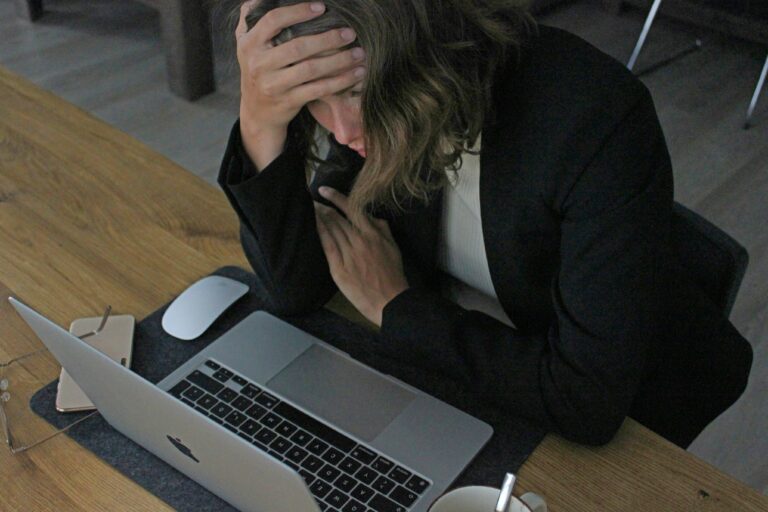
Sensory overload happens when the input coming in through your senses is more than your brain can comfortably process at once. Sights, sounds, smells, textures, and movement pile up faster than you can filter them, and the result can feel like too much, all at the same time.
Almost everyone experiences some version of this. A loud, crowded party or a bright store after a long day can push anyone past their limit. For some people, though, including autistic and ADHD individuals, it may happen more often, come on faster, and feel more intense.
Researchers describe sensory overload as stimulation that goes beyond a person’s usual threshold. [1] When that threshold is crossed, ordinary input can start to feel overwhelming, and the body and mind push for relief.
Key Takeaways
- Sensory overload is when sensory input becomes more than the brain can process.
- It can involve one sense or several at the same time, like noise, light, and crowds together.
- Anyone can experience sensory overload, though it is more frequent and intense for some people.
- Fatigue and low mood can make a person more prone to it. [1]
- When sensory overload is frequent and disruptive, understanding why can point toward helpful support.
What Sensory Overload Feels Like
Sensory overload shows up in the body, the emotions, and the mind all at once.
Physically, people often notice a racing heart, tension, or a strong urge to cover their ears or leave the room. Emotionally, it can bring irritability, panic, or a sense of being trapped.
Mentally, thinking slows down, and it may become hard to focus, follow a conversation, or make simple decisions.
Some people react to sensory overload by shutting down and becoming quiet, while others become visibly distressed. The experience looks different from person to person, and it can even look different for the same person on different days.
What Triggers Sensory Overload
Triggers are usually things in the environment that flood one or more senses. Common ones include:
- Loud or constant noise, like alarms, TVs, or many people talking
- Bright, harsh, or flickering lights
- Crowds and close physical proximity to others
- Strong smells
- Certain textures or tactile sensations
- Several inputs happening at once
Internal states matter as well. For example, people are more likely to become overloaded when they are fatigued or in a low mood, because those states make it harder to tune things out. [1] Overload also tends to build throughout the day, frequently peaking in the afternoon and early evening and easing once a person can wind down. [1]
Who Experiences Sensory Overload More Often
Heightened sensitivity to sensory input is more common than many people realize. Around 30% of the general population processes sensory and emotional information more deeply than average, which makes overload a frequent challenge for them. [1]
Sensory overload also shows up often alongside certain conditions:
- Many autistic people find sensory environments overwhelming. In health care settings, autistic adults report that auditory input in particular is a major source of stress. [2]
- People with ADHD tend to show more atypical sensory processing than others, including greater sensitivity and difficulty filtering sensory input. [4]
- Sensory sensitivity and stress are closely linked in adults, and each one can feed the other. [5]
Age also plays a role in how sensory overload shows up. A child may cry, cover their ears, or melt down, whereas a teen might avoid noisy settings or seem withdrawn. An adult may push through the workday and feel drained and irritable by evening.
Sensory Overload and Anxiety
Sensory overload and anxiety are easy to confuse, and they often occur together.
The difference is where each one begins. Sensory overload begins with sensory input that becomes too much, while anxiety is a state of worry and heightened alertness.
Though different, sensory overload and anxiety can reinforce each other. One study found that 43% of preschoolers with heightened sensory reactions also had a co-occurring anxiety condition, and early sensory sensitivity predicted later anxiety. [3]
This overlap is why anxiety and sensory overload can sometimes be hard to separate, and why a thorough evaluation is needed to understand the full picture.
How to Ease Sensory Overload
The most direct step is to lower the sensory input. That might mean stepping outside, dimming the lights, using headphones, or finding a quieter space.
Making time for recovery also helps. After an overwhelming experience, many people need a calm, low-stimulation break before they feel grounded again.
Planning ahead is another way to combat sensory overload by reducing how often it hits. Knowing that fatigue and low mood increase the odds of sensory overload, people sometimes build in quiet time before or after events they know will take a lot out of them. [1]
When Should You Seek Support For Sensory Overload
Occasional sensory overload is a normal part of living in a busy, stimulating world. It becomes worth paying closer attention to when it happens often, feels difficult to manage on your own, or starts getting in the way of school, work, or relationships.
Because sensory sensitivity overlaps with conditions like ADHD, autism, and anxiety, frequent overload is sometimes just one piece of a larger picture. Understanding that full picture can clarify what a person is dealing with and can also identify what kinds of support would be most helpful.
A thorough neuropsychological evaluation can look at attention, sensory patterns, mood, and thinking together, rather than treating any single symptom in isolation.
How KMN Psych Can Help
If sensory overload is a regular part of life for you or your child, a neuropsychological evaluation can help clarify what’s driving it. Neuropsych testing looks at attention, processing, mood, and cognition using objective, standardized measures, which can reveal how conditions like ADHD, autism, or anxiety may be contributing.
The goal is a clear, individualized understanding of how a person experiences the world, along with a detailed report you can take with you to other providers when seeking support or accommodations.
To learn more or get started, call KMN Psych at 858-923-4228 or let us verify your insurance.
FAQs
Walking into a loud, crowded, brightly lit store after a long day and feeling overwhelmed is a common example. The combined noise, light, and crowd can flood the senses at once, leaving a person tense, irritable, and desperate to leave.
Sensory overload often feels like too much happening at once. People describe a racing heart, tension, trouble thinking clearly, and a strong urge to escape or cover their ears. Some people may shut down and get quiet, while others become visibly upset.
Common triggers include loud noise, bright or flickering lights, crowds, strong smells, certain textures, and several sensory inputs happening at the same time. Being fatigued or in a low mood can make sensory overload more likely. [1]
Reducing the sensory input usually helps most. Stepping into a quieter, dimmer space, using headphones, and giving yourself recovery time can all help ease sensory overload. Planning quiet breaks around busy events may also help prevent overload.
No. Overstimulation is a response to too much sensory input, while anxiety is a state of worry and heightened alertness. They are separate experiences, though they often overlap. In adults, sensory sensitivity and stress are strongly linked and can feed into each other. [5]
[1] Weyn, S., Greven, C. U., Schmidt, S. J., & Gillebert, C. R. (2025). Sensory processing sensitivity and overstimulation in daily life: an experience sampling method study.
[2] Strömberg, M., Liman, L., Bang, P., & Igelström, K. (2022). Experiences of sensory overload and communication barriers by autistic adults in health care settings.
[3] Carpenter, K. L. H., Baranek, G. T., Copeland, W. E., Compton, S., Zucker, N., Dawson, G., & Egger, H. L. (2019). Sensory over-responsivity: an early risk factor for anxiety and behavioral challenges in young children.
[4] Jurek, L., Duchier, A., Gauld, C., Hénault, L., Giroudon, C., Fourneret, P., Cortese, S., & Nourredine, M. (2025). Sensory processing in individuals with attention-deficit/hyperactivity disorder compared with control populations: a systematic review and meta-analysis.
[5] Harrold, A., Keating, K., Larkin, F., & Setti, A. (2024). The association between sensory processing and stress in the adult population: a systematic review.