
High-functioning ADHD is a presentation of attention-deficit/hyperactivity disorder where individuals maintain outward success in work, school, or relationships while internally struggling.
High-functioning ADHD in females is a concern because symptoms are frequently overlooked or misattributed to anxiety, personality traits, or hormonal issues, leading to years of untreated struggle and preventable suffering instead of prompt ADHD diagnosis and support.
This comprehensive guide explores what high-functioning ADHD looks like in women, explains how symptoms evolve throughout life, outlines ADHD diagnostic considerations, and provides practical strategies for managing daily challenges in both personal and professional settings.
What is high-functioning ADHD in females?
High-functioning ADHD generally describes individuals whose symptoms don’t cause obvious impairment across all life domains because they’ve developed compensatory strategies or benefit from supportive environments.
In females, high-functioning ADHD frequently manifests as internalized inattentiveness rather than external hyperactivity. Women may appear organized on the surface while privately struggling with racing thoughts, difficulty sustaining attention, perfectionism that masks time management issues, or chronic feelings of being overwhelmed.
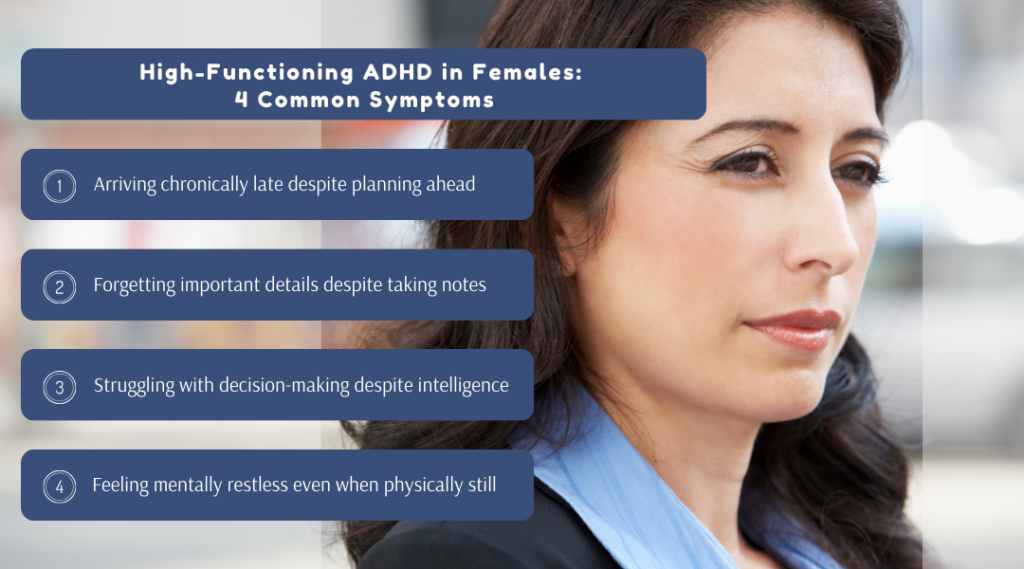
Common patterns include arriving chronically late despite planning ahead, forgetting important details despite taking notes, struggling with decision-making despite intelligence, or feeling mentally restless even when physically still. Emotional sensitivity, rejection sensitivity, dysphoria, stimming, and difficulty regulating stress responses are also frequently reported.
Workplace pressure and unrealistic expectations can accelerate ADHD burnout, especially for high-achieving adults with ADHD.
How ADHD Symptoms Differ by Sex and Life Stage
Research increasingly demonstrates that ADHD presents differently in females compared to males, contributing to underdiagnosis and delayed identification. While males with ADHD more commonly display hyperactive-impulsive symptoms that draw attention in classroom settings, females tend toward predominantly inattentive presentations that are easier to miss.
Sex-Based Symptom Differences
Females with ADHD often exhibit symptoms such as mental hyperactivity rather than physical restlessness—racing thoughts, difficulty quieting the mind, and internal restlessness that isn’t visible to observers.
They demonstrate internalizing behaviors, including anxiety, depression, and self-blame, rather than externalizing behaviors like aggression or defiance. Social masking is common, where they work hard to appear “normal” by mimicking peers’ organizational systems and suppressing hyperactive impulses.
Emotional dysregulation manifests as intense emotional responses, rejection sensitivity, and difficulty recovering from setbacks. Compensatory perfectionism driven by fear of failure leads to overpreparation and excessive double-checking. Cognitive fatigue results from constant mental effort to focus, organize, and regulate attention.
Social expectations for girls and women to be organized, compliant, and socially attuned also mean that ADHD symptoms may be attributed to personality traits, hormonal issues, anxiety, or simply being “scattered” rather than recognized as a neurodevelopmental condition.
Life Stage Considerations
ADHD symptoms in females often become more apparent or problematic during specific life transitions:
Childhood and Adolescence: Young girls may be described as “daydreamers,” “chatty,” or “disorganized,” but still perform adequately in school through intelligence and effort. Puberty can intensify symptoms as hormonal fluctuations affect executive function and emotional regulation.
College and Young Adulthood: The transition to independent living removes parental structure and support systems. Managing multiple competing demands, complex schedules, and long-term projects without external scaffolding often reveals previously compensated difficulties.
Career Establishment: Professional responsibilities requiring sustained attention, complex project management, and consistent performance can strain coping mechanisms. Women may excel in crisis situations but struggle with routine tasks and administrative follow-through.
Parenting: Managing children’s schedules, household tasks, and emotional needs while potentially also working creates an overwhelming cognitive load. Many women first seek evaluation when recognizing similar symptoms in their children.
Perimenopause and Menopause: Declining estrogen levels can worsen ADHD symptoms, as estrogen affects dopamine regulation. Women may notice increased forgetfulness, difficulty concentrating, and emotional reactivity during this transition.
Practical ADHD Coping Strategies for Daily Life
Managing high-functioning ADHD requires developing sustainable systems that reduce cognitive load and support executive function without relying solely on willpower.
Environmental Design
Create visual structure using labeled bins, color-coded folders, transparent storage containers, and visible organization systems.
Reduce decision fatigue by establishing routines for repetitive activities like morning preparations, meal planning, and evening wind-down. Minimize distractions by designating specific spaces for focused work, using noise-canceling headphones or white noise, and turning off non-essential notifications.
Design physical reminders by placing items you need to remember where you’ll naturally encounter them—keys by the door, medications by the coffee maker.
Time and Task Management
Time-box activities by assigning specific time blocks to tasks rather than working from open-ended to-do lists.
Apply the two-minute rule by completing any task that takes less than two minutes immediately rather than adding it to a list. Batch similar tasks together—return all calls during one block, process all emails in designated windows, run all errands in one trip.
Break projects into micro-tasks that can be completed in 15-30 minutes. Build in buffer time by adding 25-50% more time than you think you’ll need for activities.
Habit and Routine Development
Anchor new habits to existing ones by stacking new behaviors onto established routines. Use implementation intentions by specifying exactly when, where, and how you’ll do something.
Create accountability partnerships by sharing goals with someone who will check in regularly. Celebrate small wins by acknowledging progress and completed tasks explicitly.
Self-Care Fundamentals
Prioritize sleep consistency by maintaining regular sleep and wake times. Move your body regularly—even 10-minute movement breaks provide benefits.
Eat regularly and strategically, keeping convenient, nutritious options available. Manage stress actively through approaches like meditation, deep breathing, yoga, or spending time in nature.
ADHD Organizational Strategies for Professional Settings
Professional environments present unique challenges for women with high-functioning ADHD.
Workplace Systems
Centralize information management by using a single calendar system that captures all commitments, deadlines, and appointments. Create templates and checklists for emails, reports, meeting agendas, project plans, and other routine work products.
Implement project tracking systems using visual tools like Trello, Asana, or simple shared spreadsheets. Schedule deep work blocks for focused work on complex projects.
Process information immediately when possible, or immediately schedule time to address it.
Communication Strategies
Document everything by taking notes during meetings, following up important conversations with brief email summaries, and maintaining written records.
Use meeting agendas with specific time allocations. Set clear expectations about deadlines, deliverables, and communication preferences. Ask for written instructions when possible, especially for multi-step processes or complex requirements.
Workplace Accommodations
Certain reasonable adjustments can significantly improve performance: written rather than only verbal instructions, flexible work arrangements or remote work options, permission to use noise-canceling headphones, regular check-ins with supervisors, extended deadlines when feasible, and task prioritization assistance.
Frame accommodation requests around productivity and performance outcomes.
Medication, Fertility, Pregnancy, and Breastfeeding Considerations
For many women with ADHD, medication represents an important component of comprehensive treatment. However, reproductive life stages introduce complex considerations requiring individualized clinical discussion.
Medication Options Overview
Stimulant medications work by increasing dopamine and norepinephrine availability and often produce noticeable improvements in attention, focus, and impulse control relatively quickly—within hours to days for many people.
Non-stimulant medications work through different mechanisms and may be preferred when stimulants cause problematic side effects. These typically require several weeks to show full benefit.
Preconception and Fertility Considerations
Women planning pregnancy should discuss ADHD medication with their healthcare provider well before attempting conception.
Considerations include whether symptom management is possible through non-medication approaches during pregnancy, personal and family psychiatric history, occupational and relationship demands, and previous experience with medication discontinuation.
Pregnancy Considerations
Data on ADHD medication safety during pregnancy is evolving but remains limited. Current evidence suggests small absolute increases in certain outcomes with stimulant use, but these risks must be weighed against untreated ADHD effects.
Unmanaged ADHD during pregnancy is associated with increased risk of gestational complications, accidents, and difficulty maintaining prenatal care.
Pregnant women and their healthcare providers weigh symptom severity, functional impairment, safety concerns, support systems, and available non-medication interventions.
Breastfeeding Considerations
ADHD medications pass into breast milk in varying amounts. Limited data exists on long-term infant effects. Considerations include medication type and dose, feeding schedule, and infant age and health status.
Some women use medication timing strategies, supplement with formula, or discontinue medication while nursing. Others continue treatment while breastfeeding after an informed discussion with their providers.
Treatment Timelines: When to Expect Benefits from ADHD Treatment
Understanding realistic timelines for different ADHD treatments helps set appropriate expectations.
Medication Response Timelines
Most people notice some effect from stimulant medication within the first day or two of use. However, finding the optimal medication type, formulation, and dose typically requires several weeks of systematic adjustment.
Non-stimulant medications generally need 4-6 weeks at therapeutic doses before meaningful improvement appears, with continued benefit increases possible over 2-3 months.
Psychotherapy and Skills Training Timelines
Cognitive Behavioral Therapy adapted specifically for adult ADHD typically involves 12-16 weekly sessions.
Patients often notice early improvements in specific targeted areas within 4-6 weeks, but broader gains in executive function skills typically emerge over 8-12 weeks or longer.
Research consistently shows that combining medication with behavioral interventions produces better functional outcomes than either treatment alone.
Medication provides neurobiological support for attention and executive function, while therapy and coaching build specific skills and systems.
Can ADHD First Become Obvious Only in Adulthood?
Many women first receive an ADHD diagnosis in their 30s, 40s, or even later. Current diagnostic criteria require that several symptoms were present before age 12, even if not causing significant impairment. However, this doesn’t mean symptoms had to be obvious, diagnosed, or cause problems during childhood.
Several factors contribute to late identification: increased demands from adult responsibilities, reduced external structure from parents and teachers, hormonal changes throughout the lifespan, diagnosis in children prompting self-recognition, reduced compensation capacity as strategies become unsustainable, and mental health deterioration from chronic stress.
How to Discuss Possible ADHD With Family or Partners
Bringing up concerns about possible ADHD with loved ones can feel vulnerable, especially when worried about skepticism or dismissal.
1. Preparation Steps
Before conversations, document specific examples of how symptoms affect daily life. Gather credible information from reputable sources about ADHD in adult women. Complete a validated ADHD screener and bring results to the conversation.
Identify functional impacts on work performance, household management, relationships, parenting, or personal well-being.
2. Conversation Strategies
Use “I” statements to frame concerns from your perspective. Start with current struggles rather than immediately jumping to a diagnosis. Connect patterns over time once you’ve established current concerns. Invite their observations rather than telling them what they should see. Propose a concrete next step, like scheduling an evaluation.
Request specific support, telling them exactly how they can help.
3. Handling Dismissive Responses
If initial conversations meet with skepticism, avoid defensiveness. Provide education gradually rather than overwhelming people with information immediately. Suggest professional mediation by offering to have them attend an evaluation appointment with you.
Focus on what you need, understanding you don’t require family permission to seek evaluation. Set boundaries around harmful responses if someone responds with mockery or trivialization.
Related read: Why TikTok Can’t Diagnose ADHD
Next Steps: ADHD Testing at KMN Psych
If you recognize patterns of high-functioning ADHD affecting your work, relationships, or daily life, a comprehensive neuropsychological evaluation can provide the clarity and direction you need.
At KMN Psych in San Diego, we specialize in thorough ADHD assessment for women aged 7 and up, using validated measures designed to capture female-specific presentations that are often missed by standard screening approaches.
Our evaluation process includes detailed clinical interviews, developmental history assessment, standardized testing measuring attention, executive function, memory, and emotional regulation, and comprehensive written reports (15-20 pages) with clear diagnostic findings and treatment recommendations.
Dr. Doshay, a clinical psychologist with extensive expertise in neuropsychological evaluation, and his experienced team understand how ADHD manifests uniquely in females and provide personalized assessments tailored to your specific concerns and functional goals.
Ready to understand your brain and unlock your potential? Contact KMN Psych today to schedule your evaluation.