
ADHD burnout symptoms include chronic mental exhaustion, reduced motivation and focus, heightened emotional reactivity, and feeling overwhelmed by even routine tasks despite continued effort. Does this sound like you?
Living with ADHD often means navigating a world that isn’t designed for how your brain works. While many people understand the hallmark symptoms of ADHD—difficulty focusing, impulsivity, and hyperactivity—fewer recognize the profound exhaustion that can develop when these challenges go unmanaged.
Understanding what ADHD burnout looks like, why it happens, and how to recover is essential for anyone living with ADHD or supporting someone who does. This comprehensive guide explores the complex relationship between ADHD and burnout, offering practical strategies for recovery and prevention.
Comprehensive ADHD testing can ensure you get treatment, accommodations, and support before burnout happens.
What Is ADHD Burnout?
ADHD burnout is a state of chronic exhaustion that occurs when the demands of managing high-functioning ADHD exceed a person’s capacity to cope. Unlike general burnout, which typically stems from work-related stress, ADHD burnout results from the constant mental effort required to compensate for executive function challenges, sensory sensitivities, emotional regulation difficulties, and the pressure to meet neurotypical expectations.
People with ADHD often expend enormous energy on tasks that others find routine. Simple activities like organizing a day, remembering appointments, filtering distractions, or regulating emotional responses require conscious effort rather than happening automatically. Over time, this sustained mental exertion depletes cognitive and emotional resources, leading to a state of burnout that can affect work performance, relationships, self-care, and overall quality of life.
Related read: Why TikTok Can’t Diagnose ADHD
ADHD Burnout Symptoms
Recognizing ADHD burnout symptoms is the first step toward recovery. These symptoms often manifest across multiple domains of functioning and can vary in intensity from person to person.
Cognitive Symptoms:
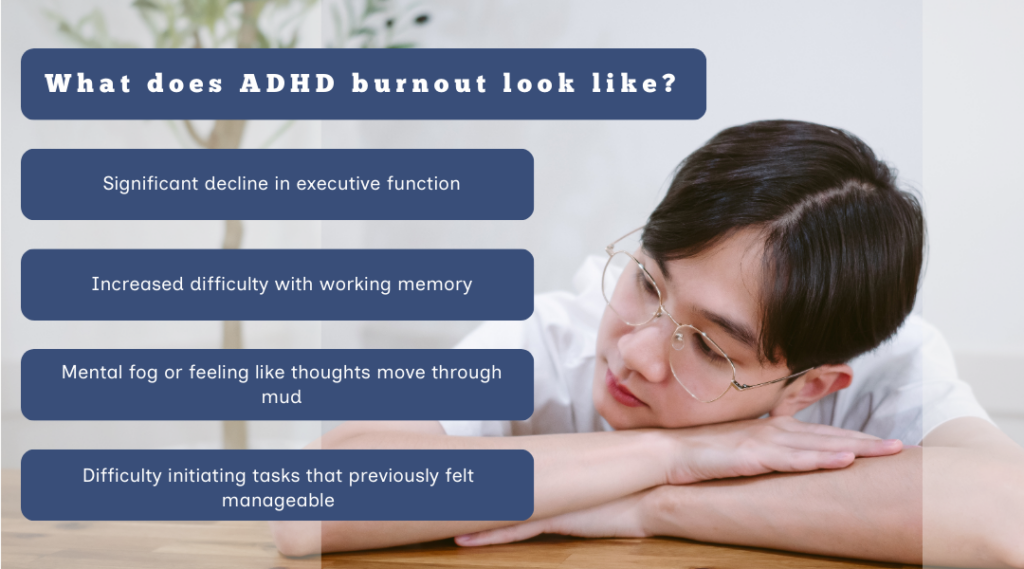
- Significant decline in executive function abilities, including planning, organizing, and prioritizing
- Increased difficulty with working memory and information retention
- Inability to concentrate even on preferred activities
- Mental fog or feeling like thoughts move through mud
- Decision fatigue, even for minor choices
- Difficulty initiating tasks that previously felt manageable
- Increased forgetfulness and missing important appointments
- More frequent ADHD stims or life-disrupting ADHD stims
Emotional Symptoms:
- Heightened emotional sensitivity and reactivity
- Overwhelming feelings of inadequacy or failure
- Cynicism or detachment from previously meaningful activities
- Increased irritability and shorter temper
- Emotional numbness or feeling disconnected
- Anxiety about tasks that didn’t previously cause stress
- Feelings of hopelessness about managing daily responsibilities
Physical Symptoms:
- Persistent fatigue that doesn’t improve with rest
- Changes in sleep patterns, including insomnia or excessive sleeping
- Physical tension, headaches, or muscle aches
- Changes in appetite or eating patterns
- Decreased immune function
- Physical restlessness despite mental exhaustion
- Digestive issues or other stress-related physical symptoms
Behavioral Symptoms:
- Withdrawal from social interactions and relationships
- Procrastination on important tasks
- Increased reliance on unhealthy coping mechanisms
- Neglect of self-care activities
- Difficulty maintaining previously established routines
- Avoidance of responsibilities or commitments
- Reduced productivity across all life areas
The presence of multiple symptoms across these categories, particularly when they persist for weeks or months, strongly suggests ADHD burnout rather than temporary stress or fatigue.
What Does ADHD Burnout Feel Like?
Understanding the subjective experience of ADHD burnout helps validate those going through it and enables others to offer more effective support. People experiencing ADHD burnout often describe a profound sense of being overwhelmed by ordinary life demands.
Many describe feeling like they’re running on empty, with no reserve energy to draw from. Tasks that once required effort but were manageable now feel insurmountable. The mental effort needed to focus, organize thoughts, or regulate emotions becomes so exhausting that even thinking about these tasks triggers anxiety or shutdown.
The experience often includes a sense of moving through thick fog, where everything feels muffled and distant. Decision-making becomes agonizing, even for simple choices like what to eat or wear. The constant internal noise of ADHD—racing thoughts, distractions, and emotional fluctuations—becomes unbearably loud, yet there’s simultaneously a feeling of emotional numbness.
People in ADHD burnout frequently report feeling stuck, as though they’re watching their life happen without being able to participate fully. They recognize tasks that need completion but lack the mental or emotional capacity to begin. This creates a painful awareness of the gap between what they need to do and what they can actually accomplish, intensifying feelings of inadequacy and failure.
Physical sensations include bone-deep tiredness that sleep doesn’t resolve, tension that won’t release, and sometimes a sensation of heaviness that makes even basic movement difficult. Simultaneously, there may be restless energy that prevents rest, creating an exhausting paradox of being both wired and tired.
The emotional experience involves heightened sensitivity to rejection, criticism, or perceived failure. Small setbacks feel catastrophic, and the usual resilience for bouncing back from difficulties seems absent. Many describe feeling emotionally raw, as though their usual protective layers have worn away.
The ADHD Burnout Cycle
ADHD burnout typically follows a cyclical pattern that, without intervention, can be difficult to break. Understanding this cycle helps identify where you might be in the process and what steps can interrupt the progression.
Phase 1: Increased Effort and Compensation
The cycle often begins during periods of high demand—starting a new job, major life transitions, or increased responsibilities. Initially, people with ADHD respond by increasing their compensatory efforts. They work harder to focus, create more systems, and push through difficulties. This phase can produce good results temporarily, reinforcing the behavior of pushing harder.
Phase 2: Depletion of Resources
As the increased effort continues without adequate rest or support, cognitive and emotional resources become depleted. Executive function abilities decline, making previously manageable tasks more difficult. Self-regulation becomes harder, leading to increased emotional reactivity. People typically respond by pushing even harder, attempting to maintain their previous level of functioning through sheer willpower.
Phase 3: Symptoms Emerge
ADHD symptoms intensify as burnout develops. Attention difficulties worsen, impulsivity increases, and emotional regulation becomes more challenging. Coping strategies that previously worked become less effective. Tasks begin falling through the cracks, and the person struggles to maintain their usual routines. Anxiety and feelings of inadequacy increase.
Phase 4: Crash and Withdrawal
Eventually, the system becomes so overloaded that a crash occurs. This might manifest as an inability to get out of bed, complete shutdown of productivity, emotional breakdown, or physical illness. The person can no longer maintain even basic functioning and may withdraw from responsibilities, relationships, and activities.
Phase 5: Attempted Recovery Without Addressing Root Causes
After the crash, there’s typically a period of rest or reduced demands. The person begins to feel somewhat better and attempts to resume normal activities. However, without addressing the underlying causes or implementing sustainable changes, they often return to the same patterns of overcompensation.
Phase 6: Return to Phase 1
As responsibilities resume, the cycle repeats. Each iteration can become more severe, with crashes happening more frequently and recovery taking longer. Breaking this cycle requires recognizing the pattern and implementing changes that address root causes rather than just symptoms.
What Causes ADHD Burnout?
ADHD burnout results from multiple intersecting factors that compound over time. Understanding these causes helps target interventions more effectively and reduces self-blame.
Emotional Overload and Mental Fatigue
People with ADHD often experience emotions more intensely than neurotypical individuals. This emotional intensity, combined with challenges in emotional regulation, means that everyday situations can trigger strong emotional responses that require significant energy to manage.
Many people with ADHD experience rejection sensitive dysphoria (RSD), which causes extreme emotional sensitivity to perceived criticism or rejection. The hypervigilance required to monitor social interactions for potential rejection, combined with the intense emotional pain when RSD is triggered, contributes substantially to mental fatigue.
Emotional overload also stems from the accumulation of small frustrations throughout the day—losing items, forgetting tasks, or misunderstanding social cues. Each incident requires emotional processing and recovery, and the cumulative effect depletes emotional resources over time.
Constant Strain on Executive Function
Executive functions—the mental processes that help us plan, organize, prioritize, and regulate behavior—are significantly impacted by ADHD. While neurotypical individuals perform many executive function tasks automatically, people with ADHD must consciously engage these processes.
Activities others find simple require extensive mental planning and effort. The brain is constantly working overtime to compensate for executive function challenges, leading to cognitive exhaustion that accumulates throughout the day and across days.
When demands on executive function are consistently high without adequate recovery time, these cognitive resources become depleted. Tasks requiring planning, decision-making, or self-control become increasingly difficult, creating a downward spiral.
Lack of Healthy Coping Mechanisms
Many people with ADHD develop coping strategies that provide short-term relief but contribute to long-term burnout. These might include perfectionism, people-pleasing, excessive caffeine consumption, or relying on last-minute pressure to motivate task completion.
While these strategies may help meet immediate demands, they’re unsustainable and often increase overall stress levels. Without healthy coping mechanisms like regular breaks, boundary-setting, and sustainable work patterns, the strain accumulates until burnout occurs.
Difficulty Balancing Work and Personal Life
ADHD can make work-life balance particularly challenging. Hyperfocus can lead to working for hours without breaks, neglecting meals, sleep, or social connections. Conversely, difficulty with task initiation might mean that work tasks bleed into personal time.
Time blindness makes it difficult to accurately estimate how long tasks will take or gauge how much time has passed. This can result in consistently overcommitting, underestimating workload, or losing track of time and missing important personal activities.
The difficulty establishing and maintaining boundaries means people with ADHD often take on more than is sustainable, leaving insufficient time for rest and activities that restore energy.
Limited Support for Symptoms
ADHD remains misunderstood by many, including employers, educators, and family members. This lack of understanding means that people with ADHD often don’t receive the accommodations or support they need to function sustainably.
Without accommodations like flexible schedules, alternative work spaces, or different organizational systems, people with ADHD must work significantly harder to meet the same standards as their neurotypical peers.
The lack of social support can be equally damaging. When friends and family don’t understand ADHD, they may interpret symptoms as laziness or irresponsibility, leading to conflicts and reduced access to emotional support.
How Long Does ADHD Burnout Last?
The duration of ADHD burnout varies significantly based on several factors, including the severity of burnout, whether the underlying causes are addressed, the level of support available, and individual differences in recovery capacity.
Mild burnout, caught early and addressed with appropriate changes, might resolve in several weeks to a few months. Moderate to severe burnout often requires several months to a year or more for full recovery. Recovery isn’t linear—there will be good days and setbacks.
Several factors influence recovery time:
- Active Intervention: Recovery is faster when specific steps are taken to address burnout
- Support System: Understanding friends and family accelerate recovery
- Ability to Reduce Demands: Recovery requires space to rest and rebuild capacity
- Treatment and Accommodations: Access to appropriate ADHD treatment significantly impacts recovery time
- Co-occurring Conditions: Depression, anxiety, or other conditions can extend recovery time
True recovery involves establishing sustainable ways of functioning that prevent future burnout cycles, which takes time to implement and adjust to.
Ways to Recover from Burnout
Recovery from ADHD burnout requires a multifaceted approach that addresses both immediate symptoms and underlying causes.
Establishing a Healthy Routine
Routine provides external structure that compensates for ADHD-related executive function challenges. However, routines for people with ADHD must be flexible enough to accommodate natural variability in symptoms while still providing helpful structure.
Start by identifying essential activities that support well-being: sleep, meals, medication, and basic self-care. Build a routine around these anchor points rather than trying to schedule every minute. Use external cues like visual schedules, phone alarms, or habit-tracking apps to support routine maintenance.
Include regular breaks throughout the day. ADHD brains need more frequent periods of rest to maintain functioning. Incorporate activities that restore energy—time in nature, creative pursuits, physical movement, or quiet solo activities.
Allow for routine flexibility during high-symptom days. A simplified morning routine is better than no routine, and accepting this prevents the all-or-nothing thinking that often sabotages consistency.
Building a Strong Support System
Recovery from burnout requires help. Start by identifying people in your life who understand or are willing to learn about ADHD. Educate trusted friends or family members about what you’re experiencing and what support would be helpful.
Consider joining ADHD support groups, either in person or online. Connecting with others who share similar experiences reduces isolation and provides practical strategies.
Professional support is particularly important. This might include a therapist specializing in ADHD, an ADHD coach, or a psychiatrist who can evaluate medication needs. If you’re in a relationship, communicate openly with your partner about burnout and what you need.
Set boundaries around social obligations during recovery. It’s acceptable to decline invitations or reduce commitments while recovering from burnout.
Implementing Mindfulness and Stress-Reduction Techniques
While ADHD can make traditional mindfulness challenging, adapted approaches can effectively reduce stress and support burnout recovery.
Body-based mindfulness practices often work better for ADHD than traditional meditation. This includes progressive muscle relaxation or body scans. Movement-based mindfulness, such as yoga, walking meditation, or mindful exercise, channels ADHD restlessness productively.
Short meditation sessions are more sustainable than lengthy ones. Even three to five minutes of focused breathing provides benefits. Sensory-based grounding techniques like the 5-4-3-2-1 technique help manage anxiety through concrete sensory input.
Breathing exercises provide immediate stress relief. Simple techniques like box breathing (inhale for four counts, hold for four, exhale for four, hold for four) activate the parasympathetic nervous system, promoting calm.
Seeking Professional Help
Professional support significantly improves burnout recovery outcomes and helps establish sustainable long-term patterns.
Neuropsychological Testing: Comprehensive ADHD testing provides detailed understanding of your cognitive profile, identifies specific strengths and challenges, and guides treatment planning. Testing can also identify co-occurring conditions that may contribute to burnout.
At KMN Psych, we provide comprehensive neuropsychological testing that evaluates cognitive functioning, executive function abilities, attention patterns, and emotional regulation. Our testing process includes a thorough evaluation, detailed 15-20 page written report, and consultation to discuss findings and recommendations.
Therapy: A therapist specializing in ADHD can help develop coping strategies, address negative thought patterns, and establish a healthier relationship with ADHD. Cognitive-behavioral therapy adapted for ADHD addresses the thoughts and behaviors that contribute to burnout.
ADHD Coaching: ADHD coaches provide practical strategies for organization, time management, and goal achievement. Unlike therapy, coaching focuses on concrete skill-building and accountability for implementing changes.
Medication Evaluation: If you’re not currently taking ADHD medication or your current medication isn’t effectively managing symptoms, consultation with a psychiatrist specializing in ADHD can be valuable. Effective medication reduces the baseline effort required to manage symptoms.
How Can I Avoid ADHD Burnout?
Prevention is far more effective than treatment for ADHD burnout. While some stress is inevitable, implementing sustainable practices reduces burnout risk.
Recognize Early Warning Signs: Pay attention to subtle indicators that you’re approaching burnout—increased forgetfulness, irritability, or difficulty with previously manageable tasks. Early recognition allows for intervention before full burnout develops.
Pace Activities and Energy: Build in regular rest periods instead of pushing through tasks until complete exhaustion. Accept that productivity varies day to day and adjust expectations accordingly.
Set Realistic Expectations: Challenge perfectionism and unrealistic standards. Done is better than perfect, especially when perfectionism leads to procrastination or overwork.
Prioritize Ruthlessly: Not everything is equally important. Use prioritization systems to identify what truly requires attention versus what can be delegated, delayed, or eliminated. Learning to say no protects time and energy.
Maintain Treatment: Consistent ADHD treatment prevents symptoms from escalating to unmanageable levels. Skipping medication or canceling therapy appointments during busy periods increases burnout risk.
Build Recovery Time Into Life: Schedule regular periods of true rest. Treat recovery time as essential rather than optional.
Develop Self-Awareness: Understanding your specific ADHD profile, triggers for overwhelm, and personal limits allows for better self-advocacy. Neuropsychological testing can provide this detailed self-knowledge.
Create Environmental Supports: Modify environments to reduce cognitive load. This might include organizing spaces to minimize clutter, using visual reminders, or using noise-canceling headphones.
Overcoming ADHD Burnout With Self-Compassion
Perhaps the most critical element of both recovery and prevention is self-compassion—treating yourself with the same kindness you would offer a friend facing similar challenges.
ADHD burnout often comes with intense self-criticism. You may judge yourself harshly for not meeting expectations or feel shame about needing accommodations. This self-criticism impedes recovery by adding emotional burden to an already depleted system.
Self-compassion involves self-kindness instead of self-judgment, recognition of common humanity rather than isolation, and mindful awareness of experiences. For ADHD burnout, this means recognizing that your struggles stem from neurological differences, not personal failure.
Practice speaking to yourself kindly. When you notice self-critical thoughts, pause and reframe them with understanding. “I’m so lazy” becomes “My brain works differently, and I’m exhausted from compensating for those differences.”
Celebrate small victories during recovery. Getting out of bed, completing one task, or asking for help are genuine accomplishments when experiencing burnout. Accept that recovery isn’t linear and be gentle with yourself through the full process.
Getting Professional Support for ADHD
If you’re experiencing ADHD burnout or want to better understand how ADHD affects your daily life, comprehensive neuropsychological testing provides essential insights. At KMN Psych, we offer specialized ADHD evaluations for children, teens, and adults throughout San Diego.
Our ADHD testing process evaluates attention, executive function, memory, and emotional regulation to create a detailed picture of your cognitive profile. This information guides treatment planning, supports accommodation requests, and provides the self-understanding necessary for developing effective coping strategies.
Dr. Doshay and our clinical team have extensive expertise in ADHD assessment and understand the connection between ADHD and burnout. We provide compassionate, thorough evaluations that respect your time while ensuring accuracy and depth.
To learn more about our ADHD testing services or schedule an appointment, call us at (858) 224-2906 or visit our website at kmnpsych.com. We accept PPO insurance and also work with non-insured clients. Take the first step toward understanding your ADHD and building a sustainable, fulfilling life free from chronic burnout.
About KMN Psych
KMN Psych provides comprehensive neuropsychological testing and diagnostic services for children, teens, and adults in San Diego, California. Our testing addresses ADHD, autism spectrum disorder, learning disabilities, anxiety, depression, and other mental health conditions. Located at 3760 Convoy Street, Suite 223, we’re committed to making high-quality psychological testing accessible and immediately helpful for our clients.